
For generations, effective land management has relied on experience, observation, and time spent in the field. While those fundamentals remain as important as ever, modern technology is providing landowners with new tools to better understand, manage, and improve their properties.
Among the most impactful advancements in recent years is the use of agricultural drones for crop management, seeding, and fertilizer applications. What was once considered emerging technology has quickly become a valuable resource for farmers, landowners, and conservation professionals looking to maximize efficiency while improving results on the ground.
At M&L Land & Wildlife, we believe technology should serve a purpose. Drone applications are not about replacing traditional land management practices. They are about making those practices more effective.
A Better View of the Landscape
One of the greatest advantages of drone technology is the ability to quickly assess large areas from above. Aerial imagery allows landowners to identify patterns and problem areas that may be difficult to recognize from the ground.
Crop stress, drainage issues, invasive vegetation, erosion concerns, and habitat deficiencies can often be detected long before they become major problems. With this information, management decisions can be made proactively rather than reactively.
When combined with boots-on-the-ground evaluations, drone data provides a more complete picture of the property's overall health and productivity.
Precision Seeding for Challenging Terrain
Many properties contain areas that are difficult or impossible to access with traditional equipment. Wet ground, steep slopes, remote openings, and sensitive habitats often present significant challenges during planting season.
Drone-based seeding offers an efficient solution.
By distributing seed from above, drones can establish cover crops, native grasses, pollinator habitats, and forage plantings in locations where conventional equipment may struggle to operate. This allows landowners to improve habitat conditions while minimizing soil disturbance and reducing the need for extensive machinery.
The result is more flexibility, better accessibility, and improved coverage across the property.
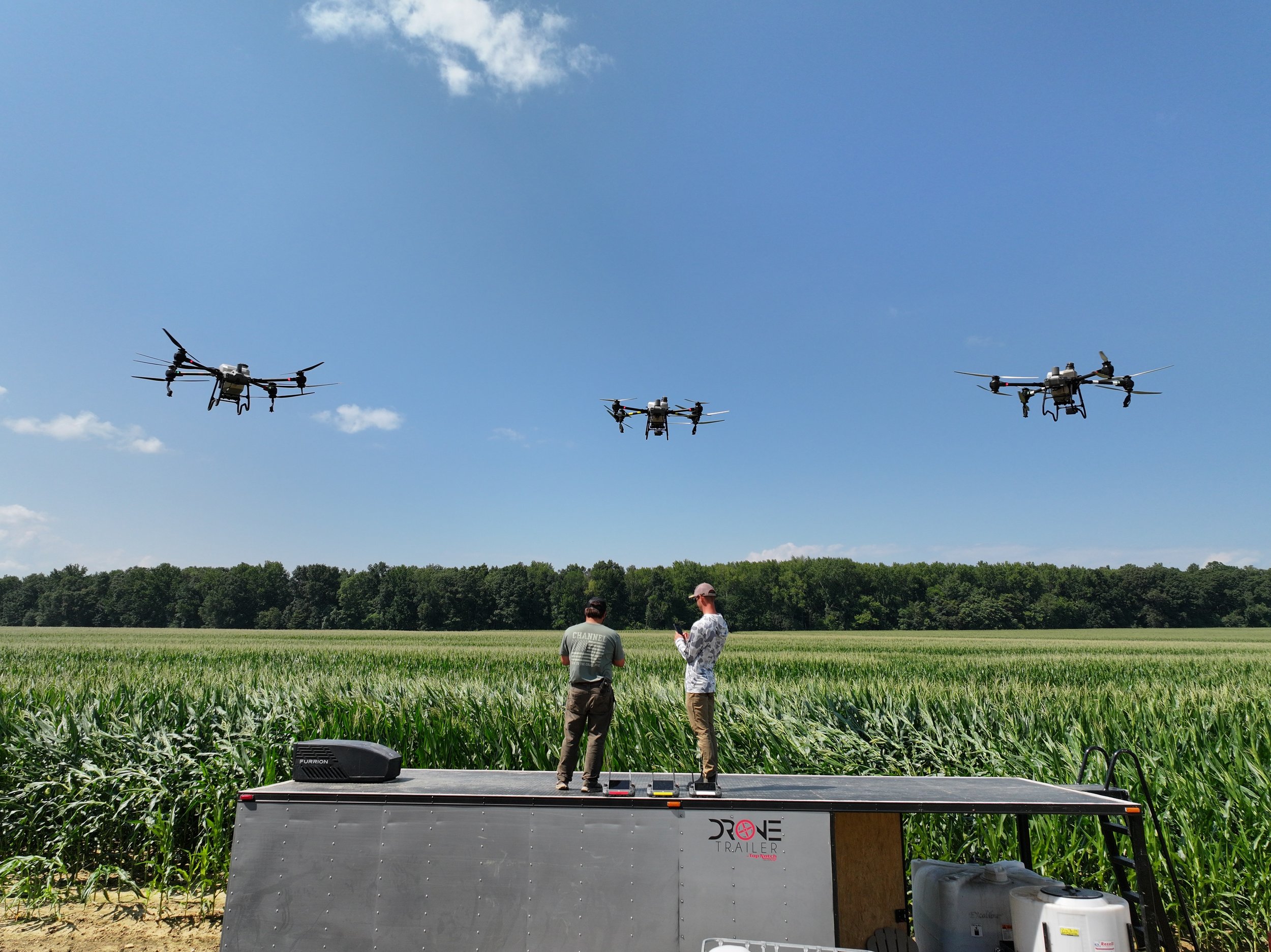
Smarter Fertilizer Applications
Applying fertilizer efficiently is one of the most important factors in maximizing crop performance while controlling costs.
Traditional broadcast methods often treat entire fields uniformly, regardless of whether every area requires the same level of nutrients. Drone technology allows for more targeted applications, helping ensure resources are placed where they are needed most.
This precision approach can improve nutrient utilization, reduce waste, and minimize environmental impacts associated with overapplication. In many situations, drone applications also allow landowners to access fields when ground conditions would prevent traditional equipment from operating effectively.
By reducing soil compaction and limiting unnecessary traffic across fields, overall crop health can benefit as well.
Increased Efficiency with Less Disturbance
Large machinery has long been a cornerstone of agriculture and land management, but it is not always the best tool for every situation.
Drone operations can often be completed quickly and with minimal impact on the landscape. Sensitive habitat areas, newly established plantings, and wet conditions can frequently be managed without the disruption associated with heavier equipment.
For wildlife-focused properties, this reduced disturbance can be particularly valuable during critical nesting, fawning, and breeding periods.
Supporting Conservation Goals
At M&L Land & Wildlife, conservation remains at the center of everything we do.
Drone technology allows us to support habitat restoration projects, establish native vegetation, monitor conservation practices, and improve the effectiveness of land management programs. Whether the goal is increasing biodiversity, improving soil health, creating pollinator habitat, or enhancing agricultural productivity, drones provide another tool to help landowners achieve lasting results.
Like any management practice, technology is most effective when paired with a thoughtful strategy and a clear understanding of the land.
The Future of Land Stewardship
The future of land management will continue to blend time-tested principles with innovative tools. Experience, ecological knowledge, and hands-on stewardship will always remain essential. Technology simply allows us to gather better information and implement solutions more efficiently.
Drone-based seeding, fertilization, and crop management represent more than a technological advancement. They offer landowners an opportunity to improve productivity, strengthen conservation efforts, and make more informed decisions about the future of their property.
Because the best land management practices are not about doing things the way they have always been done. They are about using every available resource to leave the land healthier, more productive, and better prepared for the generations that follow.
